
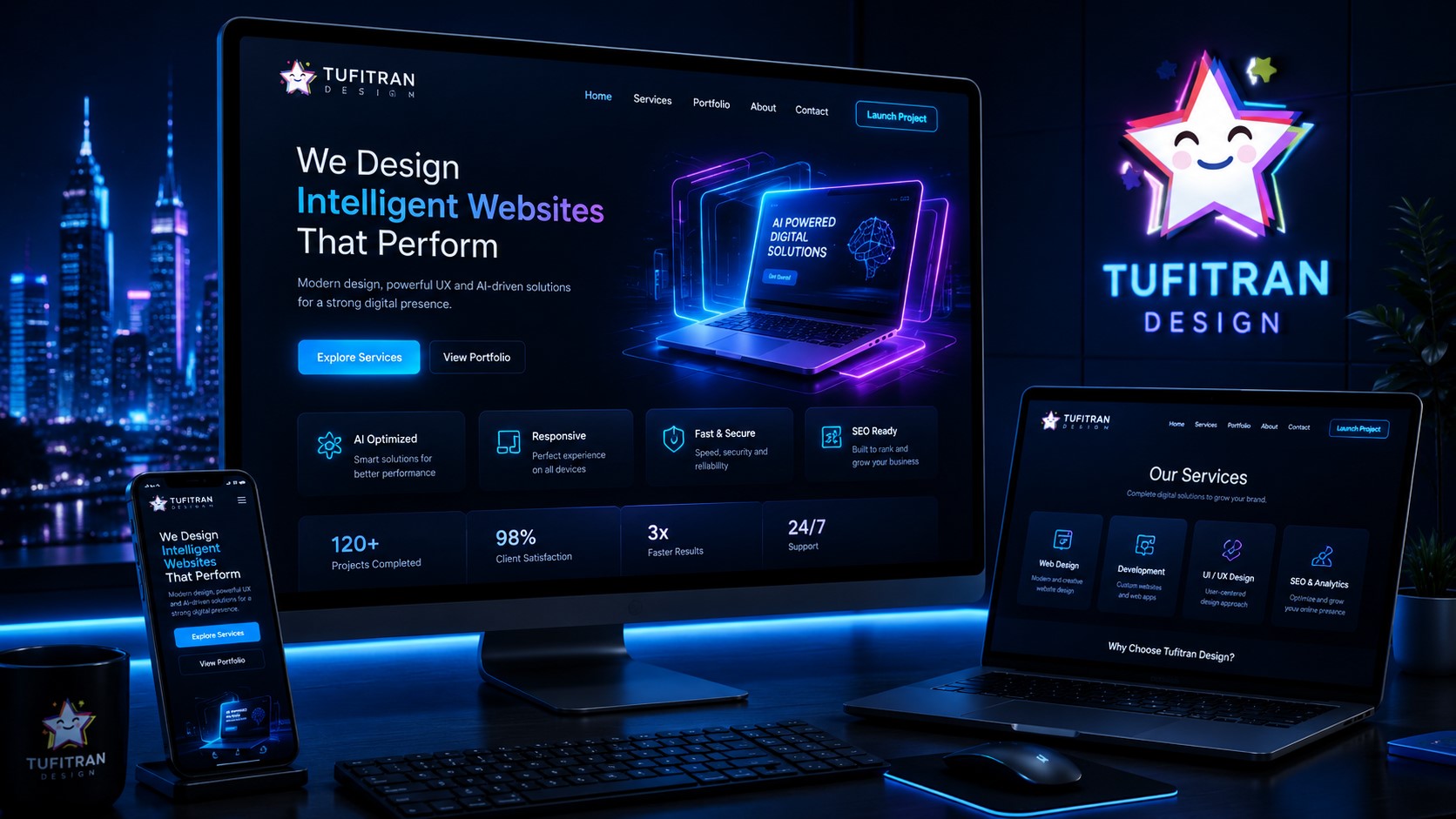
Web Design Is Becoming More Intelligent
A website is no longer just a digital brochure. It is often the first serious interaction between a brand and a potential client. People use it to judge credibility, understand services, compare options and decide whether to make contact. Artificial intelligence is changing how websites are planned, designed and improved because it gives creative teams new ways to research, prototype, write, personalize and optimize experiences. AI website design is not about pressing a button and receiving a finished brand presence. It is about using intelligent tools to make better decisions faster.
For Tufitran Design, a strong AI-powered website begins with strategy. The design must communicate who the brand is, what it offers and why it matters. AI can support moodboards, content outlines, SEO research, user flows, image directions and interface variations. But the final experience still needs human judgment. A premium website should feel clear, elegant and intentional. It should not feel like a template filled with generic text.
The Role Of AI In The Design Process
AI can improve the early stages of web design by helping teams explore more options. A designer can generate visual directions, compare messaging angles and test different page structures before committing to a final route. This is valuable because many businesses struggle to define how they should present themselves online. AI can speed up discovery, but the creative team must decide what matches the brand. The best results come from combining automation with taste.
For example, a transport company website needs trust, clarity and quick access to contact. A solar energy company needs technical credibility, service education and a professional image. An AI creative agency needs atmosphere, visual innovation and proof of capability. Each website has a different job. AI helps produce options, but the strategy determines what should stay and what should be removed.
User Experience Remains The Core
Modern websites must be beautiful, but beauty alone is not enough. A visitor needs to understand the offer quickly. Navigation must be clear. Buttons should be easy to find. Text should be readable on mobile. Sections should follow a logical order. A premium visual style becomes powerful only when it supports user experience. AI can help identify common patterns and generate content, but UX design requires empathy and structure.
A good landing page usually answers five questions: What is this brand? What does it offer? Why should I trust it? What results or examples can I see? What should I do next? If the page fails to answer these questions, the visual effects will not save it. AI website design should therefore focus on clarity first, then atmosphere. The futuristic look must support the message, not hide it.
Content, SEO And Conversion
AI can also support website content. It can help create page outlines, service descriptions, FAQ ideas, SEO keywords and call-to-action variations. This is useful for businesses that need to communicate professionally but do not know how to structure their message. However, content must be refined to sound human and specific. Generic AI copy can make a brand feel weak. Premium copy should be direct, confident and aligned with the company’s real services.
SEO also benefits from AI-assisted research. Designers can identify what potential clients are searching for, then structure pages around relevant services. A website for web design, branding, AI video creation or digital advertising should include clear service language, headings, metadata and internal links. But SEO should never make the site feel mechanical. The best websites balance search visibility with elegant reading experience.
Visual Systems And Brand Consistency
A website is often the center of a brand’s digital ecosystem. Social media, advertising, email signatures and presentations should all feel connected to it. AI website design can help create a complete visual system, including color palettes, layout patterns, image styles and motion ideas. This consistency makes the brand easier to remember. When a visitor sees the same visual language across platforms, the business appears more established and trustworthy.
For futuristic brands, the challenge is to look advanced without becoming confusing. Neon effects, glassmorphism, animated backgrounds and cinematic visuals can create a premium atmosphere, but they must be controlled. A page should load smoothly, respond well on mobile and keep text readable. Performance is part of design. A slow or messy website damages trust even if it looks impressive in screenshots.
Automation And Iteration
One of the biggest advantages of AI in web design is iteration. Brands can test headlines, layouts and calls to action more quickly. They can create alternative landing pages for campaigns, seasonal offers or different audiences. Instead of treating a website as a finished object, businesses can treat it as a living system. AI helps generate ideas for improvement, while analytics reveal what users actually do.
This mindset is especially useful for digital advertising. If traffic is coming from social media or paid campaigns, the landing page must match the promise of the ad. A visitor who clicks an AI video ad should land on a page that continues the same story. The visuals, headline and offer should feel connected. AI tools can help create these campaign-specific experiences faster.
The Future Of AI Website Design
The future of web design will be more adaptive, more personalized and more connected to content systems. Websites may change messaging based on audience segments, generate landing pages for specific campaigns and integrate AI chat or recommendation features. But the foundation will remain the same: clarity, trust, visual quality and a strong call to action. Technology improves the process, but strategy gives it direction.
Tufitran Design uses AI website design to help brands transform ideas into digital experiences that feel premium, modern and useful. The goal is not to create a website that simply looks futuristic. The goal is to create a website that communicates value, supports growth and gives the brand a stronger position online.