
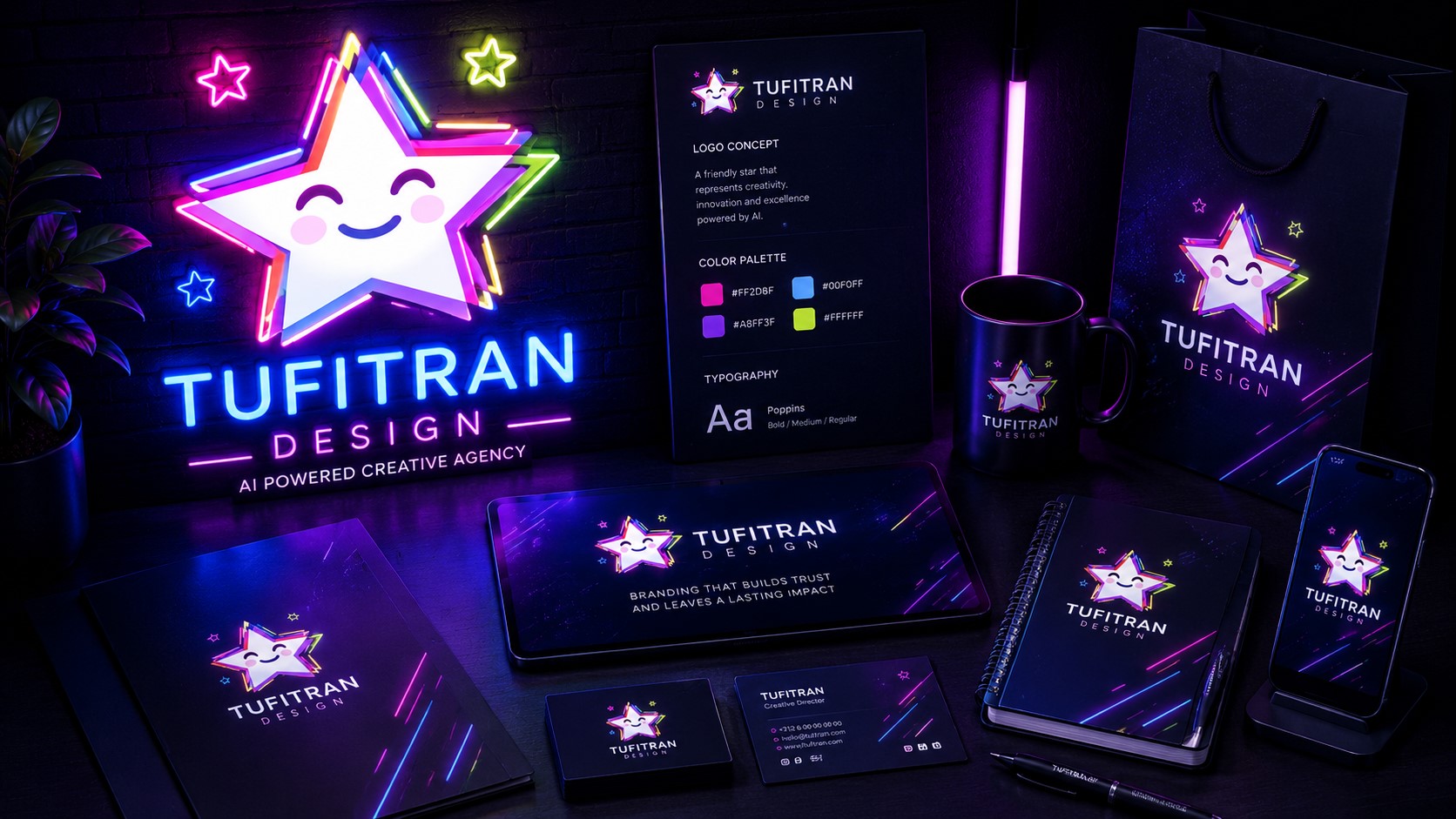
Branding Is More Than A Logo
A brand is the complete impression people have when they see, hear or interact with a business. It includes the logo, colors, typography, tone of voice, imagery, website, social media and advertising. Artificial intelligence is changing branding because it gives creative teams new ways to explore concepts, generate visual directions and test storytelling ideas. But AI does not replace brand strategy. A strong identity still begins with positioning: who the brand serves, what it promises and why it should be trusted.
AI branding becomes powerful when it helps clarify and amplify a real idea. A business can use AI to explore moodboards, logo directions, campaign visuals, product scenes and social media styles. These experiments can reveal possibilities that may not appear in a traditional process. However, not every generated image is useful. The role of the designer is to choose, refine and build a system that feels coherent.
From Visual Experiment To Identity System
Many AI visuals look impressive in isolation, but branding requires consistency. A brand identity system must work across many situations: website headers, profile images, business cards, social posts, ad creatives, videos and presentations. This means the visual language must be flexible. Colors should have clear roles. Typography should be readable. The logo should work at different sizes. Image style should feel recognizable. AI can support each part of this system, but the final decisions must serve practical use.
For example, a futuristic AI agency may use cyan lighting, dark backgrounds and glass effects. A solar energy company may need clean blue, green and white tones that communicate trust and sustainability. A tourism transport brand may need warmth, reliability and movement. AI can generate visual atmospheres for each direction, but the designer must translate the strongest direction into a usable identity.
Storytelling And Brand Meaning
Branding is also storytelling. People remember brands that communicate a clear feeling and purpose. AI can help develop slogans, campaign themes, visual metaphors and content ideas. But storytelling must be authentic. A brand should not sound like every other company using the same tools. The message should reflect real strengths, real services and real audience needs.
A strong brand story often connects a problem with a transformation. A transport company transforms uncertainty into reliability. A creative agency transforms ideas into digital reality. A beauty campaign transforms a product into a feeling of confidence and luxury. AI-assisted storytelling can help express these transformations through words, visuals and motion. The result is a brand that feels more complete and more memorable.
AI As A Creative Partner
The best way to use AI in branding is as a creative partner. It can generate variations, suggest unexpected visual combinations and accelerate the exploration stage. This allows designers to test more ideas before choosing a direction. But AI should not control the identity. If a brand is built only from random outputs, it will feel inconsistent. The designer must define the rules: color palette, logo usage, image treatment, layout rhythm, typography hierarchy and tone of voice.
These rules become the brand system. They make future content easier to create because every new asset has a foundation. Social media visuals, video ads and website sections can all follow the same direction. This is how brands become recognizable. Repetition with quality builds trust.
Premium Branding In The AI Era
As AI design becomes more accessible, premium branding will depend on taste and restraint. Many brands will use the same effects, the same futuristic imagery and the same generic copy. To stand out, a brand must be more intentional. It needs a specific point of view. It needs visual consistency. It needs a clear promise. Premium does not always mean more detail. Often, premium means better decisions.
A luxury skincare AI campaign may use minimal typography, controlled lighting and slow motion. A technology brand may use clean grids, sharp contrast and precise blue accents. A local service business may need a simple but trustworthy identity that works on mobile and social media. AI can help each brand look more professional, but the solution should match the business model and audience.
Branding Across Digital Channels
Modern branding must work everywhere. A customer may first see a business on TikTok, then visit the website, then check Instagram, then click a WhatsApp button. If every touchpoint feels different, trust becomes weaker. AI-assisted branding helps create connected assets for these channels. A brand can develop templates for reels, story covers, ad creatives, website banners and presentation slides. This creates a unified digital presence.
Digital consistency is especially important for new brands. When a company does not yet have years of reputation, visual quality becomes a trust signal. A polished identity can make the business feel more serious. It can also help the brand communicate value before a conversation even begins.
The Future Of AI Branding
The future of branding will combine strategy, AI generation, motion, personalization and fast content production. Brands will need identity systems that can support websites, social media, videos and advertising campaigns. Static logos will still matter, but motion and content systems will matter more. A brand will be judged not only by its logo, but by the quality of its digital signal.
Tufitran Design uses AI-assisted branding to help businesses transform ideas into visual systems that feel modern, premium and ready for digital growth. The goal is to create more than images. The goal is to create a brand presence that people recognize, understand and trust.